
Large and flexible space
A space large enough for the flow of movement activities and a flexible layout where equipment can be quickly rearranged.
Duyulab designs professional therapy rooms for pediatric physiotherapists, occupational therapists and speech-language therapists, as well as sensory-enriched environments for homes and play areas. Choose the room type that suits your space and purpose.
A sensory integration room is a therapy space equipped with swings, climbing and balance equipment where children can actively take part in sensory-motor activities. Duyulab designs, manufactures and installs these rooms according to the structural elements of the Ayres Sensory Integration® fidelity measure and environmental arrangement standards.
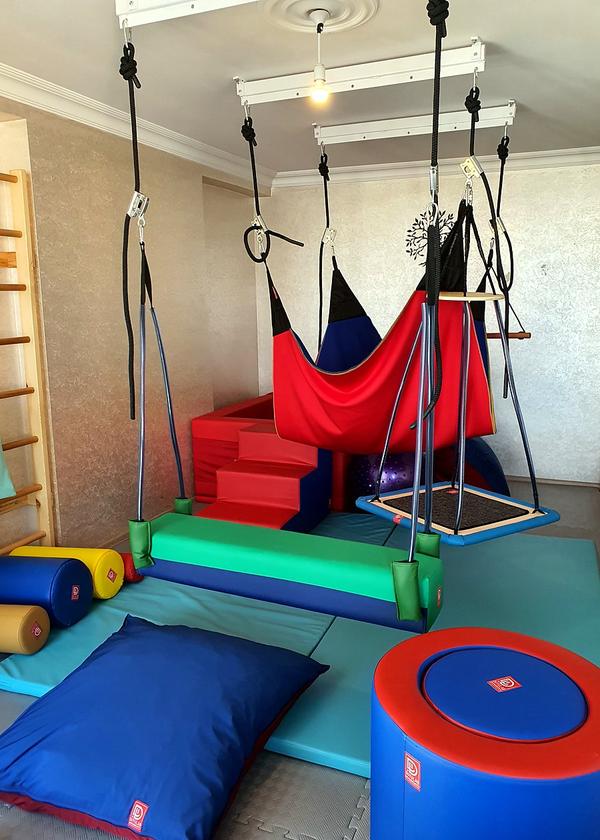
Ayres Sensory Integration® is an intervention model developed by occupational therapist, psychologist and neuroscientist A. Jean Ayres. Initially shown to be effective for children with learning difficulties and challenges participating in daily life, the model is applied today as an evidence-based practice to many diagnostic groups and individuals of different ages.
The “Physical space and equipment” section of the measure defines the basic equipment of the room. Duyulab plans these items according to the dimensions of your space in every room project.
A space large enough for the flow of movement activities and a flexible layout where equipment can be quickly rearranged.
About 75–90 cm (2.5–3 ft) between hooks so suspended equipment can move in a full arc; extra hooks are recommended depending on room size.
It can be a tent, an adjoining room or a semi-enclosed corner; a space where the child can step away from sensory load and recover.
Mats, cushions and pillows under suspended and climbing equipment; equipment adjustable to the child’s height and easy for the therapist to monitor.
Tap a photo to enlarge it, swipe sideways to see other rooms.
A sensory integration room is a safe therapy space equipped with swings, hammocks, climbing and balance equipment where children can actively take part in sensory-motor activities. Duyulab designs rooms according to the structural elements of the Ayres Sensory Integration® fidelity measure.
Duyulab installs fully equipped sensory integration rooms in spaces of 30 m² and above. For spaces under 30 m², an environmental enrichment solution with a suspension system and selected equipment is recommended.
The Ayres Sensory Integration® Intervention Fidelity Measure is a tool developed to document that the intervention is carried out in line with Ayres’ theory and principles. Its structural section covers a safe environment, assessment reports, physical space and equipment, and communication with the family; its process section covers the therapist’s strategies during the session.
Before installation, the ceiling, suspension points and floor are checked on site; room dimensions and door, window, column and beam positions are assessed. Solutions are found for unsuitable spaces and installation is carried out accordingly.
For rehabilitation centers, special education institutions, clinics, schools and homes. Pediatric occupational therapists, physiotherapists and speech-language therapists use the room according to the child’s needs.
Sensory experiences are the foundation of learning and cognitive development. Sensory-rich environments support individuals’ development, self-confidence and interaction with each other. Environmental enrichment turns existing spaces into sensory-rich environments with a suspension system and selected equipment.
Duyulab’s design and production team offers fun and educational sensory activities, toys and equipment. Equipment selection is personalized according to the needs of the child or therapist, the structure of the space and its intended use.
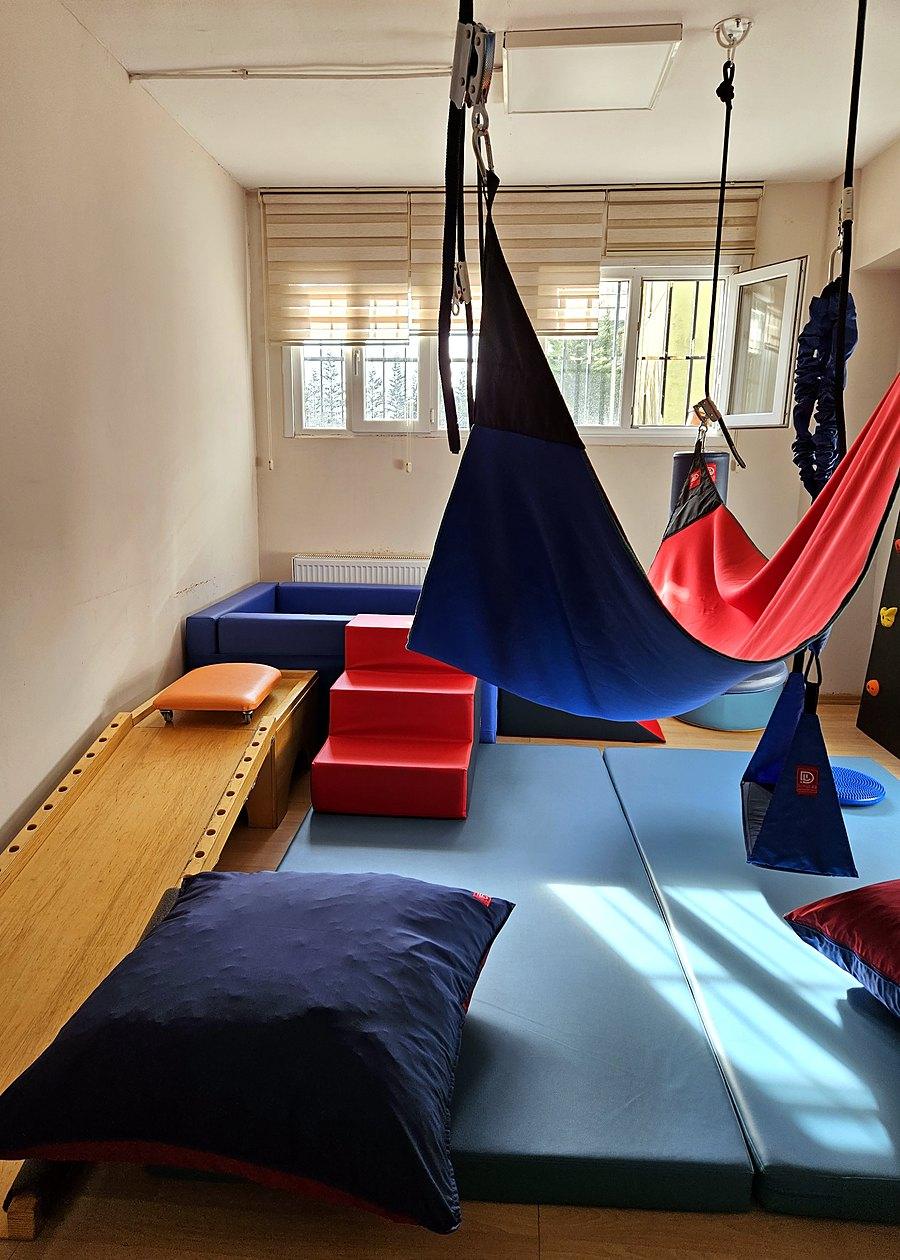
Sensory environment design draws on well-established therapy approaches in the field.
Developed by occupational therapist, psychologist and neuroscientist A. Jean Ayres. It was initially shown to be effective for children with learning difficulties and challenges participating in daily life; today it is an evidence-based approach applied to many diagnostic groups and different age groups.
Developed by Dr. Stanley Greenspan and Dr. Serena Wieder. It supports children’s social, emotional and cognitive development by assessing their individual differences; it is applied in many diagnostic groups, especially autism spectrum disorder.
Developed by Berta Bobath and her husband Karel Bobath. Physiotherapists working with children widely use this approach in various conditions that cause sensory-motor disorders, especially cerebral palsy.
Developed in the late 1970s by Dutch therapists Jan Hulsegge and Ad Verheul to increase sensory experiences for individuals with cognitive disabilities. Psychiatric clinics using snoezelen rooms still exist today.
A treatment approach used to optimize the development of various babies and children in the long term. It is used in cerebral palsy, neurodevelopmental disorders and motor development disorders of unknown cause.
Examples of rooms set up in small spaces with hammocks, swings and soft play equipment.
It is an approach that aims to support learning, cognitive development, self-confidence and social interaction by creating sensory-rich environments. Duyulab applies it in spaces under 30 m² with a suspension system and selected equipment.
The difference is in space and equipment level. In spaces of 30 m² and above, a fully equipped sensory integration room is installed according to the Ayres fidelity measure. In spaces under 30 m², a sensory arrangement is made with a suspension system and selected equipment suited to small spaces.
It is planned according to the needs of specialists working with approaches such as Ayres Sensory Integration®, DIR® Floortime™, Bobath, Snoezelen and M.A.E.S. Equipment and layout are personalized according to the age group and intended use.
Yes. Besides professional settings such as therapy centers and clinics, Duyulab also offers solutions for homes, schools and other living spaces that support children’s development.
Ceiling structure, suspension points, floor, room dimensions and door, window, column and beam positions are checked on site. No pricing is made before measurements or a site survey.
Multisensory rooms are therapy spaces specially designed to create a calm sensory environment with light, sound and tactile stimuli. In sensory modulation and snoezelen rooms, environmental arrangements and sensory stimuli aim to balance the individual’s sensory experiences, which helps prevent crises and reduce stress.
Rooms also support creativity: children and therapists can put their ideas into practice in the physical environment. Equipment selection and layout are planned according to the needs of the people who will use the room.
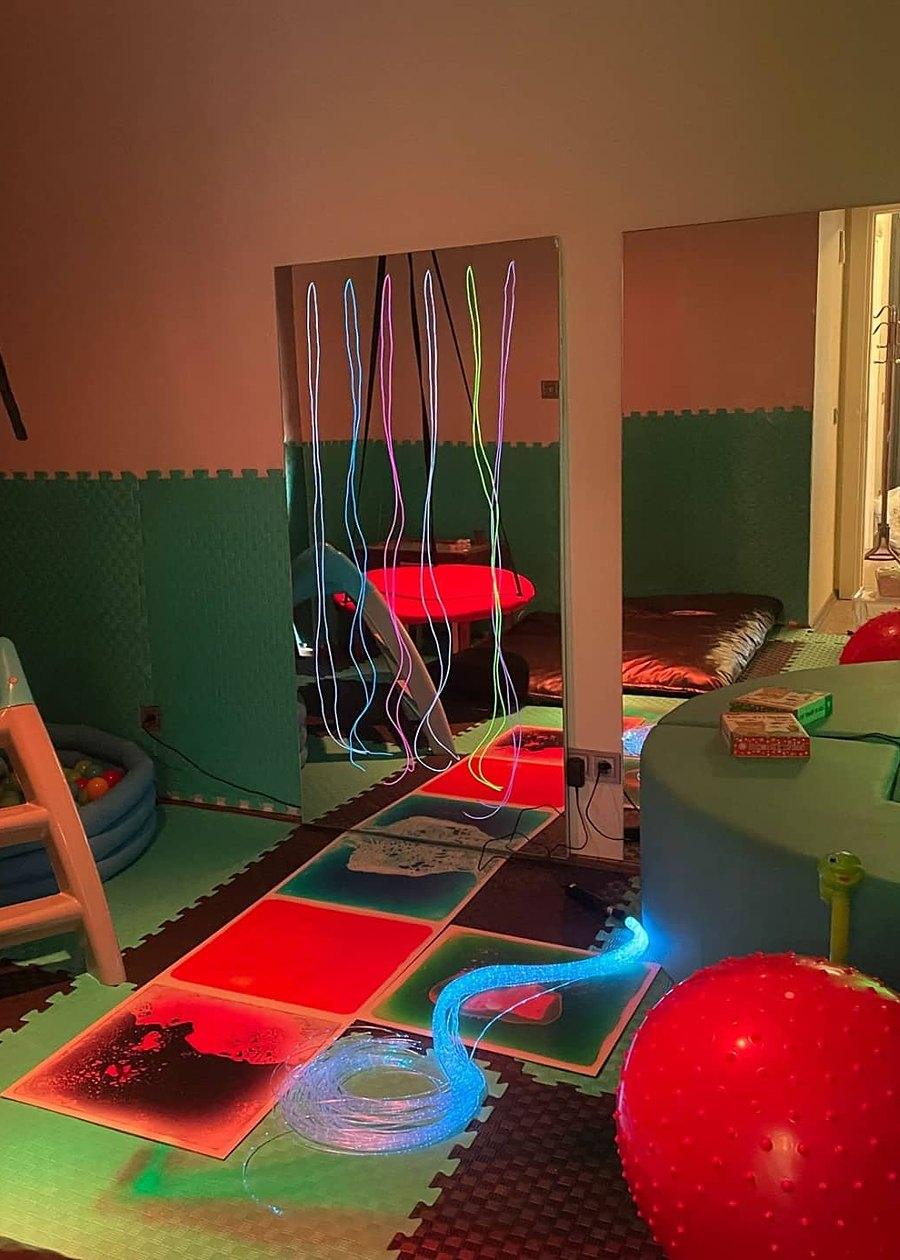
Three room approaches serving different therapy goals in the same space.
Aims to balance the individual’s sensory experiences through environmental arrangements and sensory stimuli; helps prevent crises and reduce stress.
Derived from the Dutch verbs “snuffelen” (to seek, explore) and “doezelen” (to relax), snoezelen aims to increase sensory experiences and relax. Psychiatric clinics using snoezelen rooms still exist today.
Because it has a sensory-rich and adaptable structure, it offers an individualized, personalized therapy experience.
Products suited to the room’s purpose are chosen from the multisensory products in the catalog.
Offers a calming atmosphere; its colors can be changed by remote control. Helps children focus their attention and develop visual sensory skills.
Provides the visual sensory input of gradually changing light; the cushioned platform around the tube creates a soft seating area and helps children regulate before therapy.
A multisensory play area full of tactile and visual stimuli. Dimensions 120 × 150 × 60 cm; includes a remote-controlled RGB illuminated pool and 500 transparent 7 cm balls.
A handy material for exploring colors, light and shadow; it attracts attention while helping develop fine motor skills.
Shots of rooms designed with light, color and tactile stimuli.
A multisensory room is a therapy space specially designed to create a calm sensory environment with light, sound and tactile stimuli. Sensory modulation rooms, snoezelen rooms and sensory integration rooms are examples of this approach.
It is a multisensory environment developed in the late 1970s by Dutch therapists Jan Hulsegge and Ad Verheul to increase sensory experiences for individuals with cognitive disabilities. It aims to increase sensory experiences and relax.
It aims to balance the individual’s sensory experiences through environmental arrangements and sensory stimuli. This helps prevent crises and reduce stress.
Multisensory products such as a fiber optic light bundle, bubble tube, illuminated ball pool and illuminated play table are chosen according to the purpose of the room and the dimensions of the space.
No. A multisensory room focuses on calming and sensory regulation. A sensory integration room is a therapy space set up according to the Ayres fidelity measure and equipped with movement equipment. The two approaches can be planned together in the same space.


